ICTQT introduces high school students to quantum technologies and sustainability through the RAVEN project
How can advanced technologies help address environmental challenges and improve quality of life? This question was at the heart of a recent outreach activity organized within the European RAVEN project.
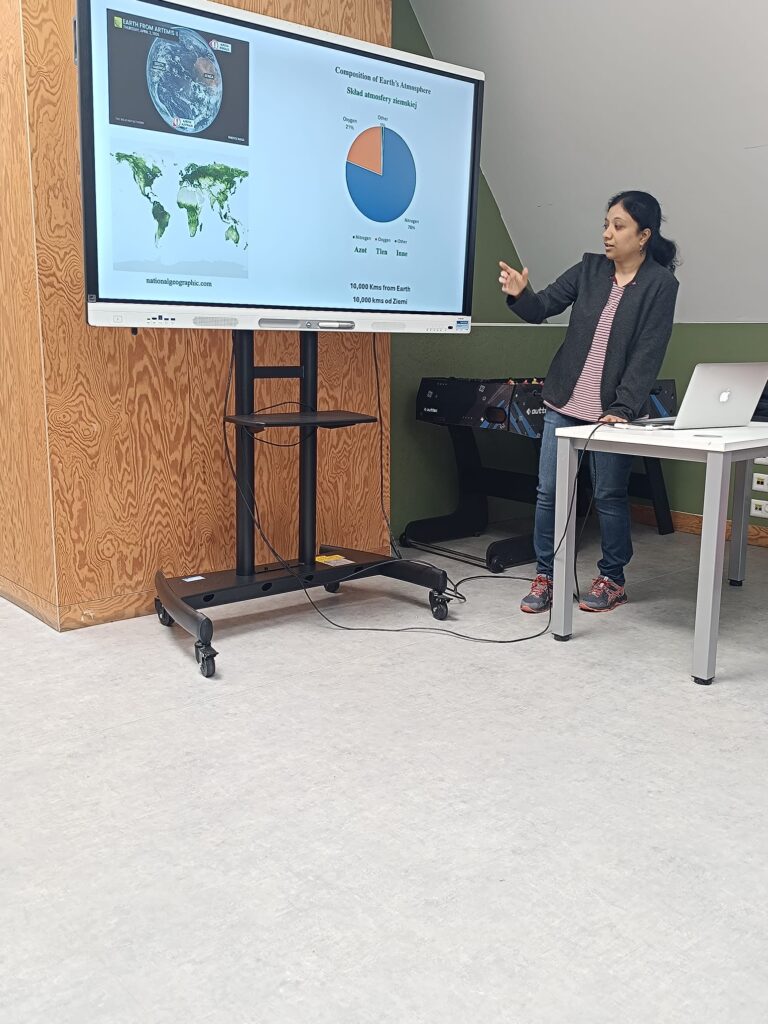
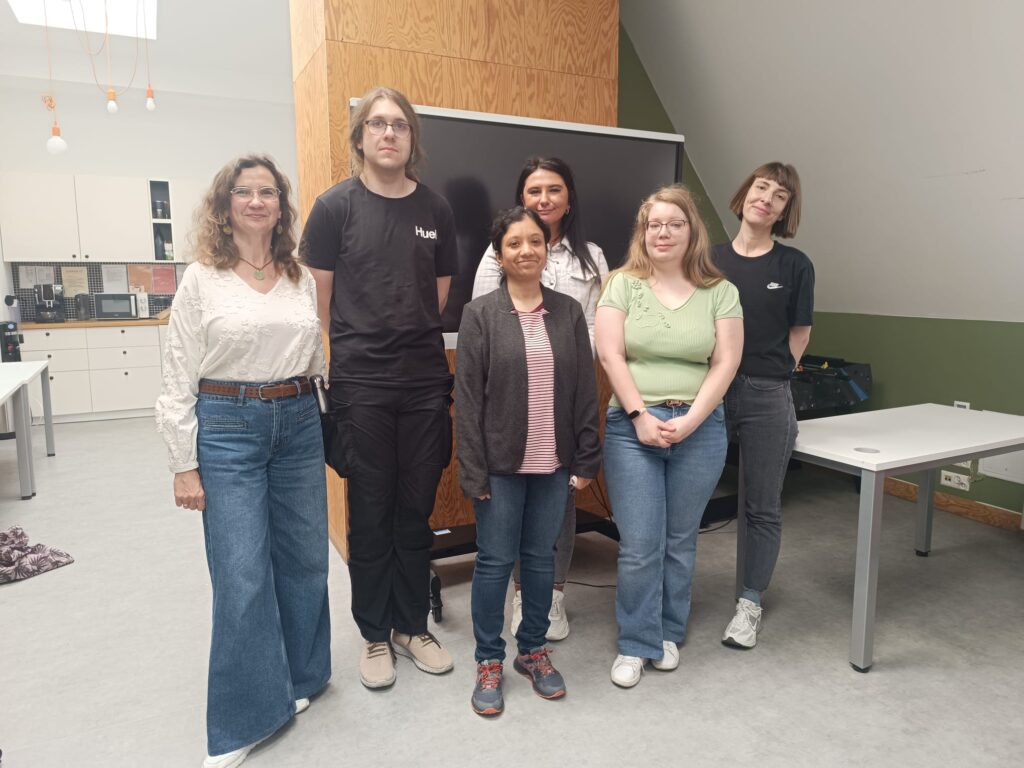
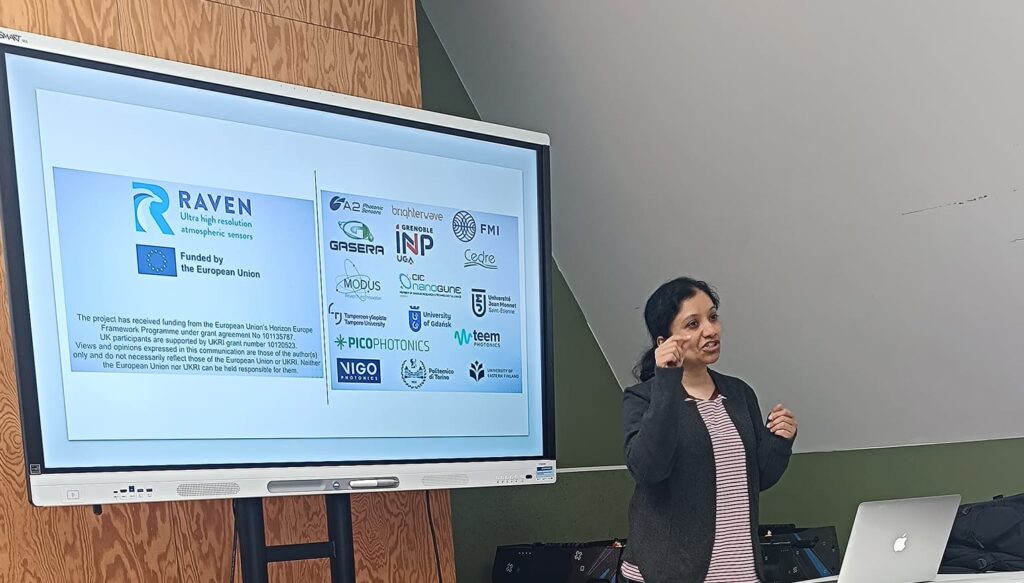
Dr. Akshata Shenoy, a researcher in the Quantum Open Systems in Relation to Quantum Optics Group at the International Centre for Theory of Quantum Technologies (ICTQT), University of Gdańsk, recently visited Akademia Dobrej Edukacji w Gdańsku – Liceum (Academy of Good Education in Gdańsk – High School) to introduce students to the connections between environmental challenges, sensing technologies, and emerging quantum solutions.
The lecture explored topics ranging from the composition of the Earth’s atmosphere and greenhouse gases to the impact of air pollution on human health, particularly among children and adolescents. Students learned about the prevalence of respiratory and cardiovascular diseases linked to poor air quality and discussed the role of science and technology in addressing these challenges.
The meeting also introduced methods for detecting air pollutants using optical gas sensors and explored what future sensing technologies should offer in terms of accuracy, affordability, accessibility, and practical usability. These discussions naturally connected to the broader goals of the RAVEN project, which seeks to develop innovative approaches for environmental monitoring and pollution detection.
Reflecting on the event, Dr. Shenoy highlighted the students’ enthusiasm and engagement:
“The students were highly enthusiastic and interactive. I was impressed by their level of awareness on various issues. Although the lecture was delivered in English, communication proceeded smoothly thanks to the students’ strong language skills and their eagerness to participate in the discussion.”
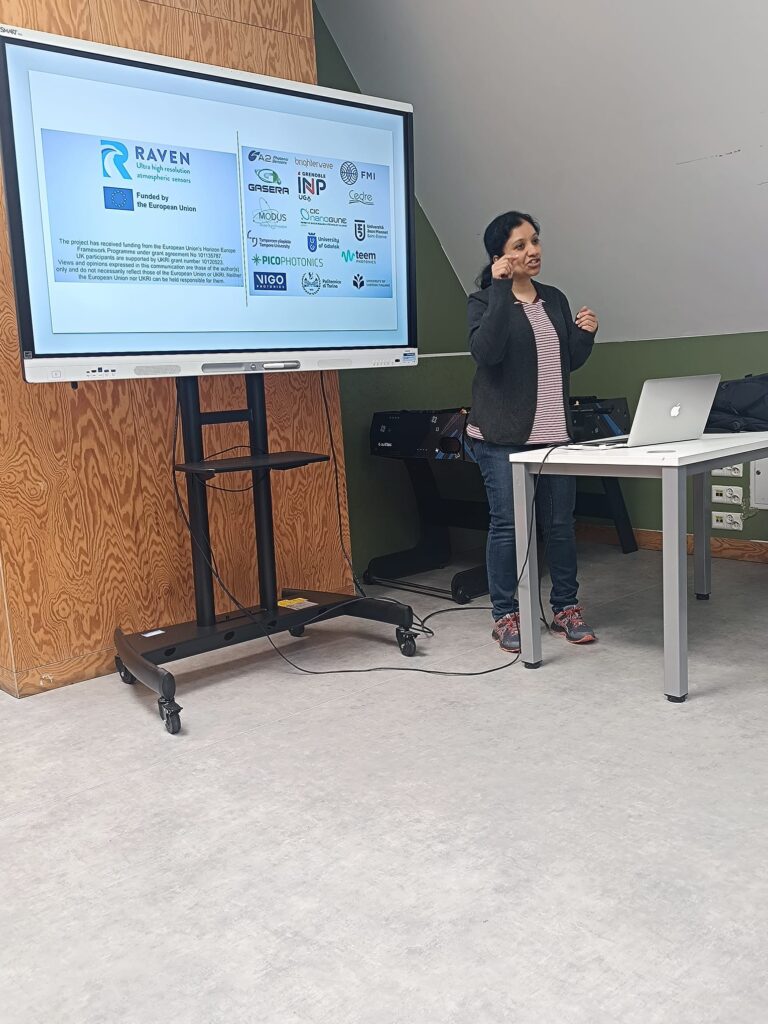
The event concluded with a presentation of the RAVEN project and a discussion of how advanced scientific research can translate into practical solutions that affect everyday life.
“This experience allowed me to connect with students by demonstrating how advanced technology can impact even the simplest aspects of everyday life, particularly in healthcare and well-being. At the same time, it highlighted the importance of human interactions, enabling two-way learning irrespective of one’s level of scientific knowledge.”
The outreach activity represents one of ICTQT’s first initiatives explicitly connecting quantum technologies, environmental sustainability, and public engagement. While ICTQT is primarily known for research in quantum technologies, emerging quantum sensing methods have the potential to contribute to environmental monitoring, pollution detection, and other applications with direct societal impact.
By engaging with young audiences, ICTQT aims not only to communicate the importance of scientific research but also to inspire future generations to explore careers in science, technology, and innovation.
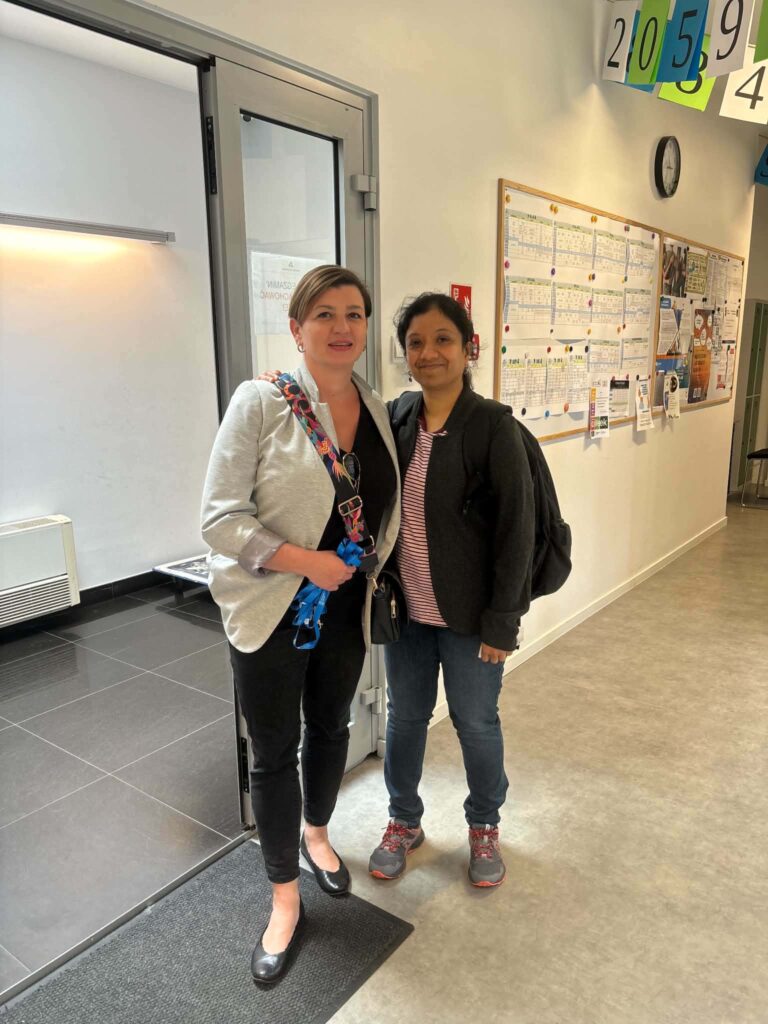
Dr. Shenoy thanked the students and staff of Akademia Dobrej Edukacji for their warm welcome and acknowledged the support of Prof. Łukasz Rudnicki and Marta Krzyżykowska from ICTQT in facilitating the activity.